
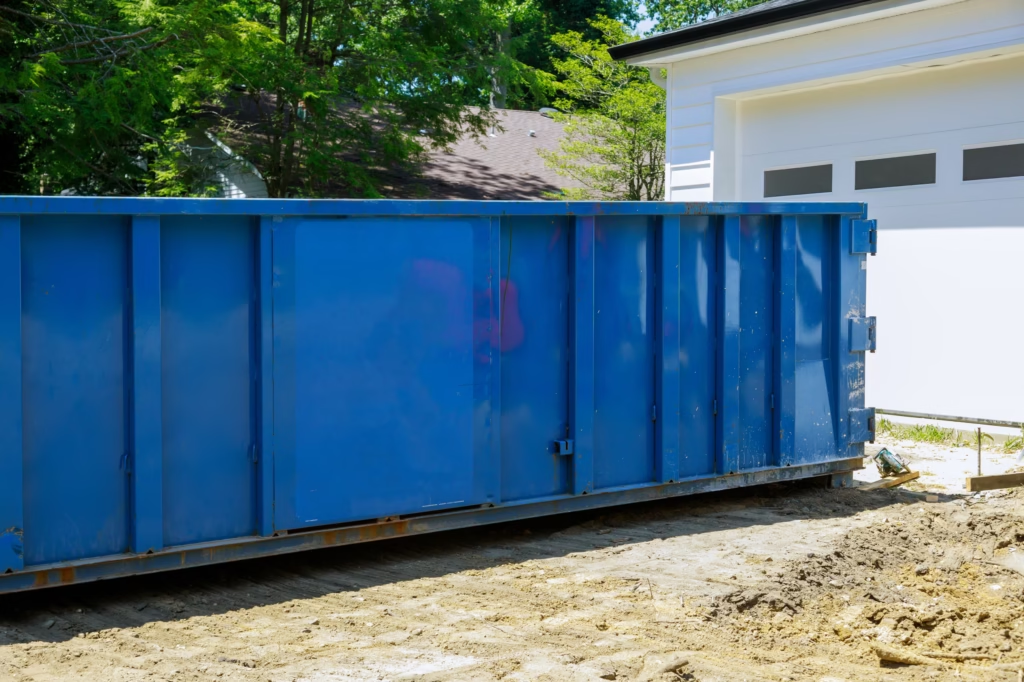
Construction and demolition work generated roughly 600 million tons of debris in a single year in the United States, more than double the amount of municipal trash households throw out, according to the U.S. Environmental Protection Agency. On a large-scale job, that volume shows up fast. A commercial dumpster rental gives your crew one fixed place to put every scrap of drywall, broken block and torn-out subfloor, instead of losing hours to pickup truck runs across town.
The difference between a well-managed debris plan and an improvised one usually shows up in the schedule, not the invoice. Crews that stop working to haul trash are crews that are not framing, wiring or finishing.
What Separates a Commercial Container From a Residential One
The equipment looks similar, but the use case is different. Residential rentals tend to run 10 to 20 cubic yards and sit in a driveway for a weekend cleanout. Commercial roll-offs on active job sites are usually 20, 30 or 40 cubic yards, stay on site for weeks, and get swapped out on a repeating schedule.
Weight allowances differ too. A commercial container is rated for heavier mixed loads: lumber, metal studs, shingles, packaging and demolition debris all going in together. If your project also generates clean fill like brick or concrete, that material almost always needs its own dedicated low-sided box because of weight.
The Real Cost of Hauling Debris Load by Load
Running a crew truck to the transfer station sounds cheap until you price out the hours. Two workers, a 45 minute round trip, tipping fees and fuel, repeated three times a week, quietly eats a few thousand dollars over the span of a mid-size build.
- Labor drain: two crew members off task for 90 minutes per run, several times a week.
- Equipment wear: overloaded truck beds and trailers take a beating hauling masonry and metal.
- Tip fee variability: small loads at a transfer station are usually charged at a minimum rate, so you pay for capacity you did not use.
- Site clutter: debris piles waiting for the next run block access lanes and staging areas.
A single roll-off on site collapses all of that into one predictable line item. For a deeper look at the economics of the two approaches, our breakdown of roll-off rental versus load-by-load hauling runs through the math.
Sizing the Container to the Scope of Work
Under sizing is the most common mistake we see on commercial jobs, because contractors estimate by material volume and forget how much air is trapped in cabinetry, ductwork and framing waste. A rough field rule: a 30 yard box holds about nine to ten pickup truck loads.
- 20 yard: tenant improvement work, small interior demo, roofing tear-offs under about 30 squares.
- 30 yard: the workhorse for commercial renovation, restaurant buildouts and multi-unit remodels with mixed debris.
- 40 yard: new construction framing waste, large demolition, warehouse cleanouts and anything bulky but light.
- Dedicated heavy box: concrete, brick, dirt and asphalt, kept separate so you stay under weight limits.
If the project runs in phases, it often makes sense to start with a 40 yard during demo and step down to a 30 yard once finish work begins. Compare capacities and weight allowances on our size and pricing page before you lock in a schedule.
Housekeeping Rules Inspectors Actually Check
OSHA’s construction housekeeping standard, 29 CFR 1926.25, requires that scrap lumber with protruding nails and other debris be cleared from work areas, passageways and stairs during construction. Containers for combustible waste have to be on site and emptied regularly. A roll-off positioned near the active work zone is the simplest way to satisfy that.
Beyond compliance, clean sites move faster. Trip-and-fall incidents, nail punctures and blocked egress routes all trace back to debris that had nowhere to go.
Scheduling Swap-Outs Around Your Build Calendar
The best commercial accounts set a standing swap schedule rather than calling in a panic when the box is full. Think about where your debris spikes land: demo week, roofing, drywall hang, and final punch-out cleanup each produce very different volumes.
Most haulers can turn a swap in 24 to 48 hours, and same-day service is often possible if you call before mid-morning. On tight sites where only one container fits, build a half-day buffer into the schedule so your crew is not standing around waiting for an empty box. When volume spikes past what one container can absorb, it is usually cheaper to add a second dumpster than to pay rush fees on repeated swaps.
What Goes In, What Has to Stay Out
Mixed construction and demolition debris is the standard commercial load: wood, drywall, metal, roofing, carpet, fixtures, packaging and non-hazardous insulation. Pallets are generally accepted, though some facilities handle them differently, which we cover in our post on putting pallets in a commercial dumpster.
Prohibited items are consistent across Georgia landfills and transfer stations:
- Liquid paint, solvents, adhesives and other hazardous chemicals.
- Tires, batteries and appliances containing refrigerants unless the unit has been evacuated and tagged.
- Asbestos-containing material, which requires licensed abatement and separate manifested disposal.
- Loose yard debris mixed into C&D loads, which is better handled through dedicated yard waste disposal options.
Contaminated loads get rejected or reclassified at the scale, and that cost lands back on your project. A five minute tailgate talk about what goes in the box prevents most of it.
Placement, Access and Permits on Commercial Sites
A 30 yard roll-off needs roughly 22 feet of length, 8 feet of width and about 23 feet of overhead clearance for the truck to raise and lower it. Position it where the loaded truck can pull straight out, and keep it off soft ground or fresh asphalt that can rut under 10 tons of steel and debris.
Private commercial property rarely requires a permit. Placement in a public right-of-way, a parking lane or a sidewalk closure generally does, and municipal review in DeKalb and Gwinnett jurisdictions can take several business days. Pull that permit before mobilization week, not during it.
Project location shapes the logistics too. Crews needing temporary dumpster rental in Decatur, GA with tighter urban access than a job on an open pad and swap timing should reflect that.
Get a Commercial Container Scheduled for Your Next Project
Easy Roll Dumpsters handles commercial dumpster rentals for job sites across the region. Tell us your scope, timeline, and site access, and we will recommend a size and swap schedule that fits the build. Contact us today to put a container on the ground before your crew mobilizes.